
Prime Minister Addresses AADA 2026: Industry Resilience, Reform and the Future of Automotive Retail
At the AADA 2026 Convention, Prime Minister Anthony Albanese addressed 3,800 dealerships and 64,000 jobs, highlighting regulatory reform, economic resilience, and the evolving challenge of customer capture in automotive retail.
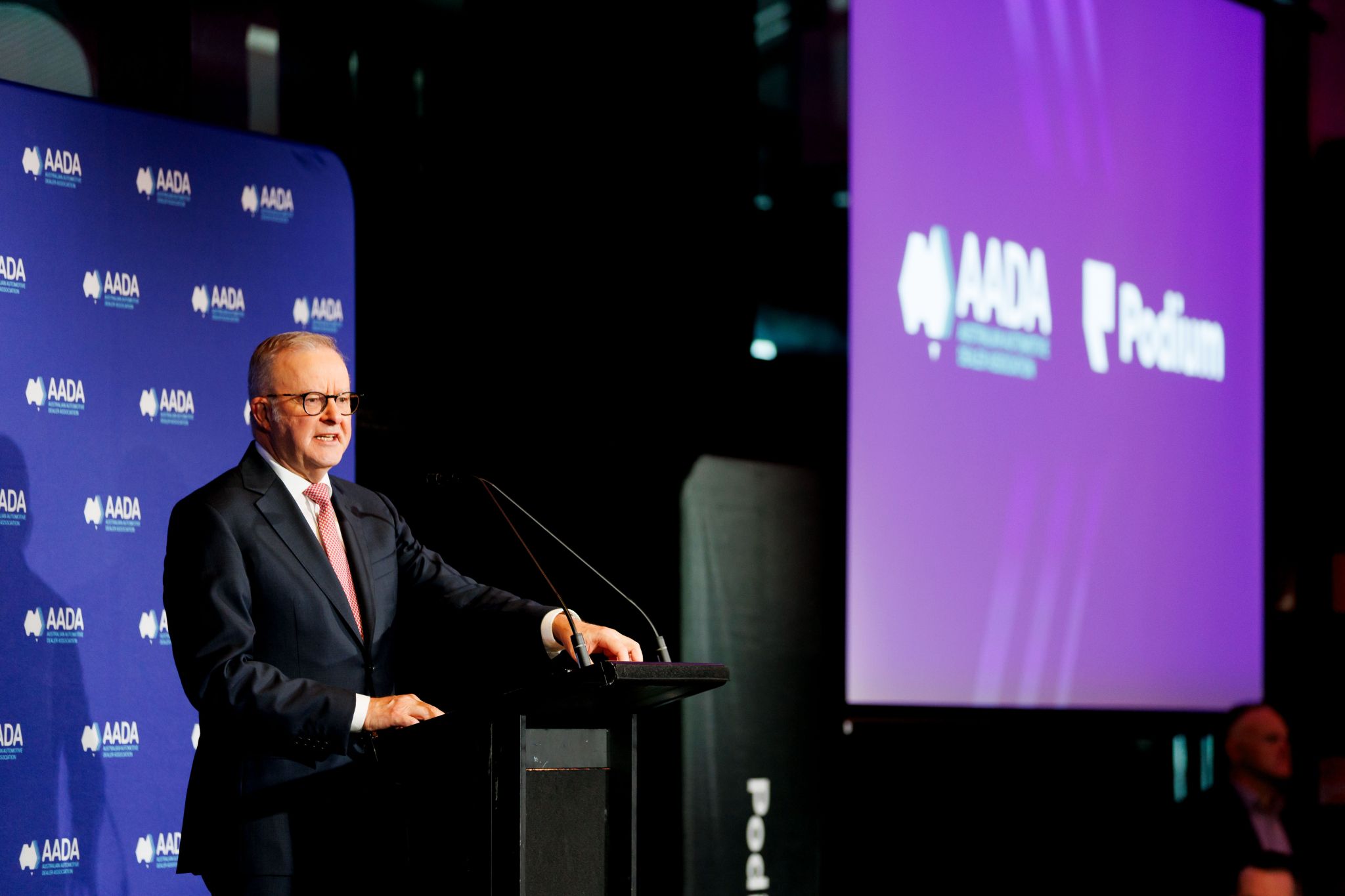
At the recent AADA 2026 Convention, the Australian automotive industry was brought into sharp focus, with Prime Minister Anthony Albanese addressing a room representing over 3,800 dealerships and 64,000 jobs nationwide.
The message was clear: the dealership network remains a critical pillar of Australia's economy, but the environment it operates in is shifting rapidly.
A Sector Built on Trust — Not Just Transactions
In his address, the Prime Minister highlighted the unique role dealerships play in both the national economy and local communities.
From employment and apprenticeships to grassroots sponsorships and community engagement, dealerships continue to operate as more than just retail environments — they are relationship-driven businesses built on trust.
This was reinforced by a key theme throughout the speech: the human element in automotive purchasing remains irreplaceable.
Despite increasing digitisation, buying a vehicle is still one of the most significant financial decisions Australians make — and one that relies heavily on expertise, guidance, and face-to-face interaction.
Economic Pressures and Global Uncertainty
The broader economic context was also front of mind.
Ongoing global disruption — from geopolitical conflict to inflationary pressure and rising interest rates — continues to impact supply chains, operating costs, and consumer behaviour.
The Government outlined a number of measures aimed at strengthening economic resilience, including:
- Fuel security initiatives and increased domestic reserves
- ACCC oversight on pricing protections
- Investment in skills, manufacturing, and clean energy
- Strengthening Australia's self-reliance in global supply chains
For dealerships, this reinforces a reality already being felt on the ground: external pressures are not temporary — they are structural.
Regulatory Reform: A Shift in Power Dynamics
A significant portion of the address focused on upcoming reforms to consumer and competition law.
These reforms are designed to address long-standing imbalances between dealers and manufacturers, including:
- Expansion of Unfair Trading Practice protections
- Stronger enforcement against unfair contract terms
- Improved supplier indemnification and reimbursement frameworks
- Greater protections for franchise holders under the Franchising Code
The intent is to create a more level playing field — not only for dealerships, but for small businesses more broadly.
The Real Industry Challenge: Not Demand — But Capture
While macroeconomic and regulatory themes dominated the keynote, the underlying commercial reality for dealerships is becoming increasingly clear:
Demand is not the core issue. Capture is.
Across the industry, several structural challenges persist:
- Profitability is tightening, with cost bases running dangerously close to gross profit
- Traditional cost-cutting approaches are reaching their limits
- Finance and insurance (F&I) performance remains constrained by human capacity
- Customers are engaging outside dealership hours, often without being captured
- Significant lifecycle value — particularly in used vehicles, refinance, and retention — remains underutilised
In short, dealerships are not lacking opportunity — they are constrained by operating models that haven't evolved at the same pace as customer behaviour.
Where the Opportunity Lies
The opportunity for the industry is not simply to reduce cost, but to:
- Increase revenue per customer
- Improve conversion across existing traffic
- Expand finance penetration through better access and speed
- Capture demand beyond the showroom and beyond business hours
- Leverage lifecycle value, not just initial transactions
These are not incremental gains — they represent the next phase of dealership performance.
Looking Ahead
The AADA 2026 Convention reinforced a pivotal moment for the automotive industry.
Dealerships remain strong, trusted, and deeply embedded in their communities — but the environment around them is evolving quickly.
As the Prime Minister noted,
"If you don't shape change, change shapes you."
For the industry, the path forward will be defined by how effectively it adapts — balancing its traditional strengths with new models of operating, engaging, and converting customers.
More News
youX Appoints Matt Perry as Chief Commercial Officer
youX appoints Matt Perry as Chief Commercial Officer, adding senior depth as lender integrations, product commercialisation, OEM, dealer and broker partnerships scale.

Zsofia Nichols Wins Innovator of the Year
youX's Zsofia Nichols has been named Innovator of the Year at the Women in Finance Awards 2025, recognised for her work transforming how the industry uses technology, automation, and AI.